Mold Inspection & Testing Services
Request an inspection estimate today
Say you come home and the basement smells damp and earthy. Maybe a stain is spreading on the wall. You could guess, or you could find out. A mold inspection looks at the whole picture: moisture, air flow, hidden spots and the source of the problem.
Definecook Mold Help is a referral service. We do not inspect or test anything ourselves. We connect homeowners in Woodbury and the Woodbury area with independent local providers who do. Ask for an estimate, compare what each provider offers, and choose with confidence. Clear answers now help protect the house, its value and a future sale.
Mold Inspection Near Me: Where to Start
Say you open the basement door and catch a damp, earthy smell. Or you spot a dark patch behind a shelf. You want answers, not guesses. A mold inspection finds the source of the moisture and shows how far the problem has spread.
The search for mold inspection near me often starts with worry. That is normal. A local provider in our network can look at the space and explain what is going on in plain words.
Do This First
While you wait for a visit, keep it simple:
- Stay out of the area if you feel sick or have asthma.
- Stop a leak only if you can do it safely.
- Do not scrub, bleach or sand the spot. That can spread spores.
- Take clear photos with dates.
- Keep fans off in that room so air does not move spores around.
Signs That Point to Hidden Mold
Say you notice a smell that comes back after cleaning. Or paint bubbles, wallpaper curls, or a ceiling shows a ring. These clues often mean moisture is behind the surface. Mold does not have to be visible to be there.
When an Inspection Makes Sense
After a Leak, Flood or Storm
Say a pipe burst in winter, or spring snowmelt seeped through a stone foundation. Materials that stayed wet for days can grow mold. An inspection checks whether things dried out well or whether moisture is still trapped.
Before You Buy or Sell
Protect the house. A buyer may ask about a musty crawl space. A report with moisture readings and sample results can calm those worries. It also helps you fix real problems before they cost you in a sale.
When Your Body Seems to Notice First
Say everyone sneezes more at home than anywhere else. An inspection cannot diagnose health issues. It can show whether a moisture problem is present, which you can then share with your doctor.
What Happens During a Mold Inspection
The Walk-Through
The provider starts by asking questions. Where did you see it? Has there been a leak? Then they look at ceilings, walls, windows, attics, basements and utility areas.
Moisture Readings
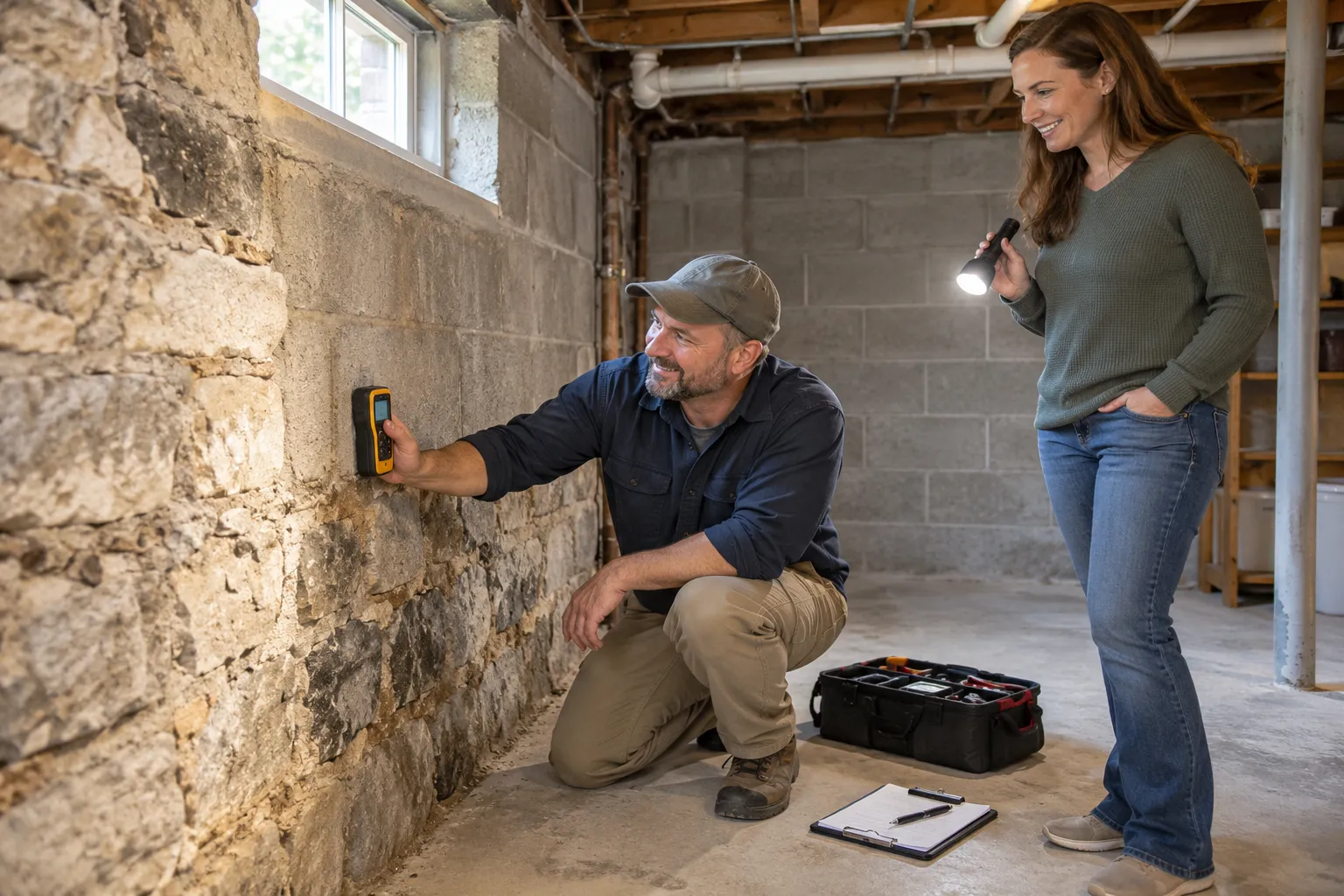
Special meters check wall and floor moisture without cutting into them. A thermal camera can show cool, damp zones you cannot see. This is where professional tools matter most.
Looking Where You Cannot See
Older homes with full basements and block walls often hide trouble behind finished panels or under stairs. A provider knows the usual hiding spots and checks them one by one.
Types of Mold Testing
Air Samples
A small pump pulls air through a cartridge. Results show which spores float in the room. The provider may also take an outdoor sample to compare.
Surface Samples
A swab or tape lift picks up material from a stain. This confirms whether a spot is mold and what kind it may be.
Lab Analysis and Certified Mold Testing
Samples go to a lab for study. Ask whether the provider offers certified mold testing and uses an accredited lab. Testing is a tool, not the whole answer. The inspection explains what the numbers mean.
Understanding Your Results
A report may list spore counts, mold types and moisture readings. Say two rooms show different results. That can tell you where the problem lives. Ask the provider to walk you through the report line by line.
A clear result does not always mean the job is done. If moisture remains, mold can return.
Inspection and Remediation: Separate or Together?
Some providers do both. Others only inspect. Each choice has a point. A provider who only inspects has no stake in selling you removal work. A provider who does both may save you time. Either way, get the plan in writing.
If the inspection finds heavy growth, residential mold removal may be the next step. Our remediation pages cover that.
Safe DIY, Smart Pro
You can help. Fix small drips, run a dehumidifier, clear clutter from walls and write down what you see. These steps are safe.
Leave the rest to a pro. Opening walls, taking samples and reading moisture maps need proper tools and training. Guessing wrong can leave mold behind.
How to Prepare for Your Inspection
- Clear a path to the basement, attic and crawl space.
- Move boxes away from walls.
- Keep a list of past leaks and repairs.
- Do not clean the suspect area first.
- Close windows and doors a few hours before air testing if asked.
Questions to Ask the Provider
A good provider will not mind questions. Try these:
- What will you check, and how long will it take?
- Which samples do you take, and why?
- Which lab handles them?
- Will the report be written and clear?
- Do you also do removal, and is that priced separately?
Request a callback to check provider availability, or request an estimate online. A job done right protects the house and the years ahead.
What's Included
Moisture Mapping
Meters and cameras trace damp spots inside walls, floors and ceilings without tearing anything open.
Air and Surface Sampling
Samples show which spores are in the room and what a stain really is.
Lab Analysis Reports
Samples go to a lab, and you get written results explained clearly.
Source Findings
The provider looks for the leak, humidity or air flow problem that feeds the mold.
What Mold Inspection and Testing Typically Costs
Prices vary by home size, number of samples and local rates. These are typical U.S. ranges, not quotes. Always ask each provider for a written estimate that lists what is included.
| Item | Typical range | Notes |
|---|---|---|
| Visual mold inspection | $300 – $700 | Walk-through and moisture checks in an average home |
| Air sample (each) | $50 – $150 | Usually paired with an outdoor comparison sample |
| Surface swab or tape lift | $40 – $100 | Confirms whether a stain is mold |
| Lab analysis fees | $40 – $120 | May be included or billed per sample |
| Thermal imaging add-on | $100 – $300 | Helps find hidden moisture |
| Full inspection with written report | $450 – $1,000 | Larger or older homes cost more |
How It Works
Request an Estimate
Tell us about your home and what you noticed. It takes a minute.
Get Matched
We connect you with an independent local provider in our network.
Inspection and Sampling
The provider checks moisture, looks for hidden spots and takes any needed samples.
Review Your Written Report
Go over results with the provider and decide on next steps together.
Why Call Definecook Mold Help
Clear Answers
Know what is growing, where it is, and why, so you do not pay for guesswork.
Protect Value
A documented inspection helps you fix issues properly before a sale.
Local Providers
Providers know regional damp issues like old foundations and snowmelt seepage.
Easy Comparison
Request an estimate and compare scope, price and reports side by side.
Other Services
Need mold inspection & testing services in Woodbury?
Tell us about the damp spot, the smell or the stain. Send a request and a local provider can follow up with a written quote. There is no obligation.
No obligationMold Inspection & Testing Services FAQ
How much does a mold inspection cost?
Typical U.S. prices run from a few hundred dollars for a basic visual inspection to around a thousand for a full report with samples. Size, location and testing needs change the price, so ask for a written quote.
Do I need mold testing if I can see mold?
Not always. If you can see it, the bigger question is why it is there. An inspection finds the moisture source. Testing can help in some cases, like hidden spread or a sale.
Can I test for mold myself with a kit?
Home kits can show spores exist, but spores are in every home. They cannot tell you the source, the spread or how serious it is. A provider with proper tools gives a more useful picture.
Get in touch
Tell us about the damp spot, the smell or the stain. Send a request and a local provider can follow up with a written quote. There is no obligation.
No obligation